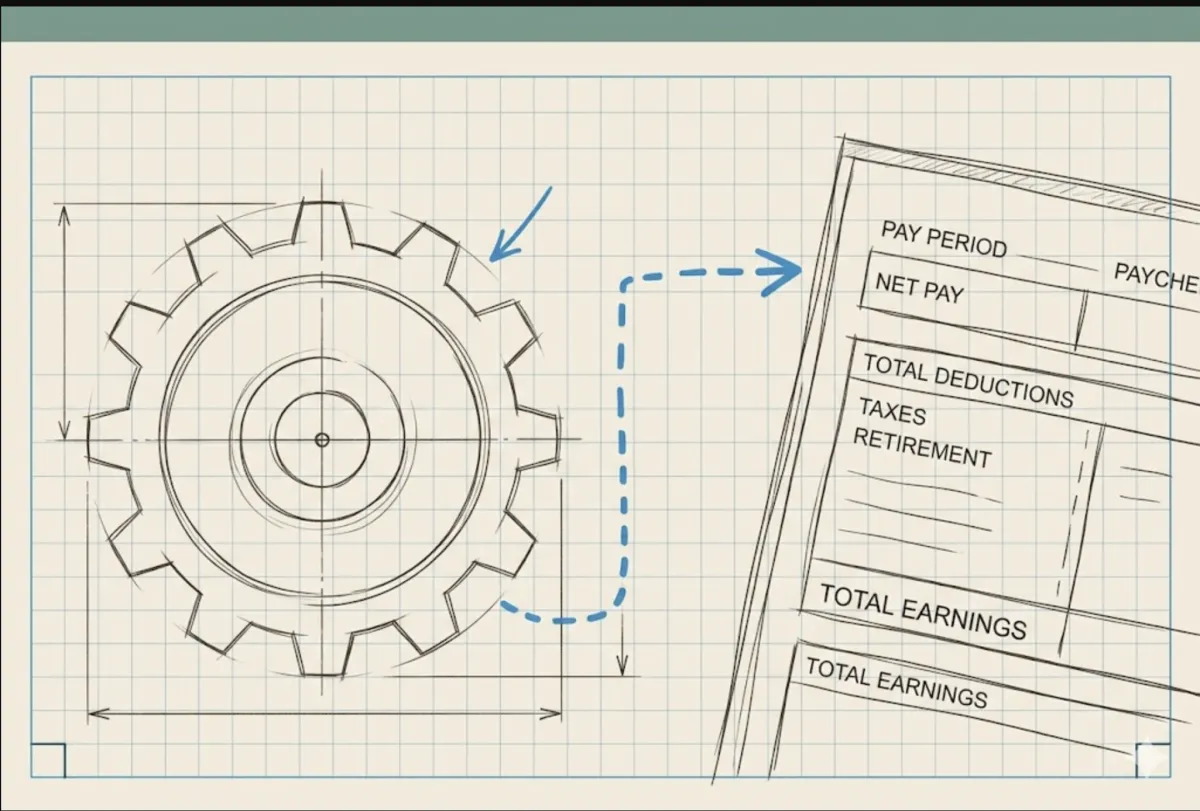
Teaching Teens About Work History — From Factories to First Jobs | Life Prep Curriculum
Your teen wants a job. Or doesn’t want a job. Either way, they have exactly zero context for what “work” even means beyond trading hours for money.
Ask them what a union is and you’ll get a blank stare. Ask them why they can’t work past 10pm on a school night and they’ll assume it’s your rule—not a federal law that exists because children used to operate machinery in the dark for fourteen hours a day.
Here’s the thing: your teen’s history class is about to hand them the entire backstory of the labor protections they’ll rely on for the rest of their working lives. Most of them will zone out through it. That’s not because the content is irrelevant—it’s because nobody connected it to the job application sitting in their browser tab.
The Standards Are Already Teaching This
Labor history standards—working conditions, unions, reform movements, and labor legislation—map directly onto the skills your teen will need before they ever clock in somewhere. When they study why workers organized in the 1830s and 1840s, they’re studying the origin story of every employee right they’ll ever exercise: the minimum wage, the 40-hour workweek, the concept that your employer can’t just decide you don’t get paid today.
The social studies standards that cover industrialization require students to analyze cause and effect, evaluate primary sources, and understand how economic systems change over time. Those aren’t dusty academic exercises. That’s the same thinking your teen needs when they’re comparing two job offers, reading the fine print on an employment agreement, or figuring out whether their paycheck math actually adds up.
What this looks like side-by-side:
Or consider this one:
The academic standard IS the life skill. Your teen just doesn’t know it yet because nobody’s drawn the line between “labor reform, 1842” and “your shift at Chick-fil-A, next Tuesday.”
Self-Advocacy Has an Origin Story
And here’s where it gets personal. The history of labor organizing is, at its core, a story about self-advocacy. Workers who had no voice figured out how to get one. They identified unfair conditions, built arguments, communicated demands, and negotiated outcomes. That’s the same skill set your teen will need the first time a manager asks them to stay late without overtime, or a coworker takes credit for their work, or they need to ask for a raise.
Self-advocacy isn’t a personality trait some teens have and others don’t. It’s a skill—and the
for it is already in their curriculum.
A script for this:
For some teens, role-playing that conversation feels natural. Others might prefer writing it out first, or practicing with a trusted adult before the stakes are real. The entry point matters less than the practice itself.
The Life Skills 101 Guide walks through how self-advocacy and other workplace readiness skills connect to what your teen is already learning—it’s a good foundation if this topic resonates.
This is also exactly what the upcoming Industrial Revolution Unit Pack (WH-IND-001) is built around: students calculate real factory wages from the 1840s, compare them to modern equivalents, analyze primary source testimony from child laborers, and trace the direct line from those conditions to the labor protections that cover their summer job. History class stops being abstract the moment the math is real.
Standards Alignment
CCSS ELA — Reading: Informational Text
CCSS.ELA-LITERACY.RI.9-10.6: Determine an author’s point of view or purpose and analyze how rhetoric advances that point of view. (Analyzing labor reformers’ arguments and employer counter-arguments.)
CCSS ELA — Speaking & Listening
CCSS.ELA-LITERACY.SL.9-10.1: Initiate and participate effectively in collaborative discussions, building on others’ ideas. (Workplace communication and self-advocacy conversations.)
CCSS ELA — Writing
CCSS.ELA-LITERACY.W.9-10.1: Write arguments to support claims with clear reasons and relevant evidence. (Building a case for workplace rights, negotiating conditions.)
C3 Framework (Social Studies)
D2.His.1.9-12: Evaluate how historical events were shaped by unique circumstances of time and place. (Understanding how industrial-era conditions created modern labor law.)
D2.Eco.1.9-12: Analyze how incentives influence choices that may result in policies with a range of costs and benefits. (Weighing worker protections against economic growth arguments.)
CASEL Competencies
Self-Awareness: Recognizing personal rights, strengths, and areas for growth in professional contexts.
Responsible Decision-Making: Making informed choices about employment situations using evidence and ethical reasoning.
Relationship Skills: Communicating effectively to advocate for oneself in workplace settings.
ASCA Mindsets & Behaviors
M 4: Understanding that postsecondary education and lifelong learning are necessary for long-term career success.
B-LS 7: Identify long- and short-term academic, career, and social/emotional goals.
B-SS 2: Create positive and supportive relationships with other students. (Transferred to: building professional relationships and navigating workplace dynamics.)
