
Life Skills 101: Everything Teens Need to Know Before 18
The practical skills not taught in school—but essential for real-world success
The Skills School Doesn't Teach—But Life Demands
What should we have learned in school but never did?
How to budget. How to advocate for yourself. How to plan a project, handle conflict, or make a major decision without spiraling.
These are the things that should be taught in school but aren't—the real-world skills students actually need to thrive as adults.
What Are Life Skills, Really?
Students leave school knowing how to pass a test…
But not how to ask for help.
Or plan a project.
Or navigate a tough decision without spiraling.
That's where life skills come in.
Life skills are the tools that help students thrive beyond the bell schedule—from budgeting and planning to self-advocacy and communication.
And let's be real: most students aren't getting that in school.
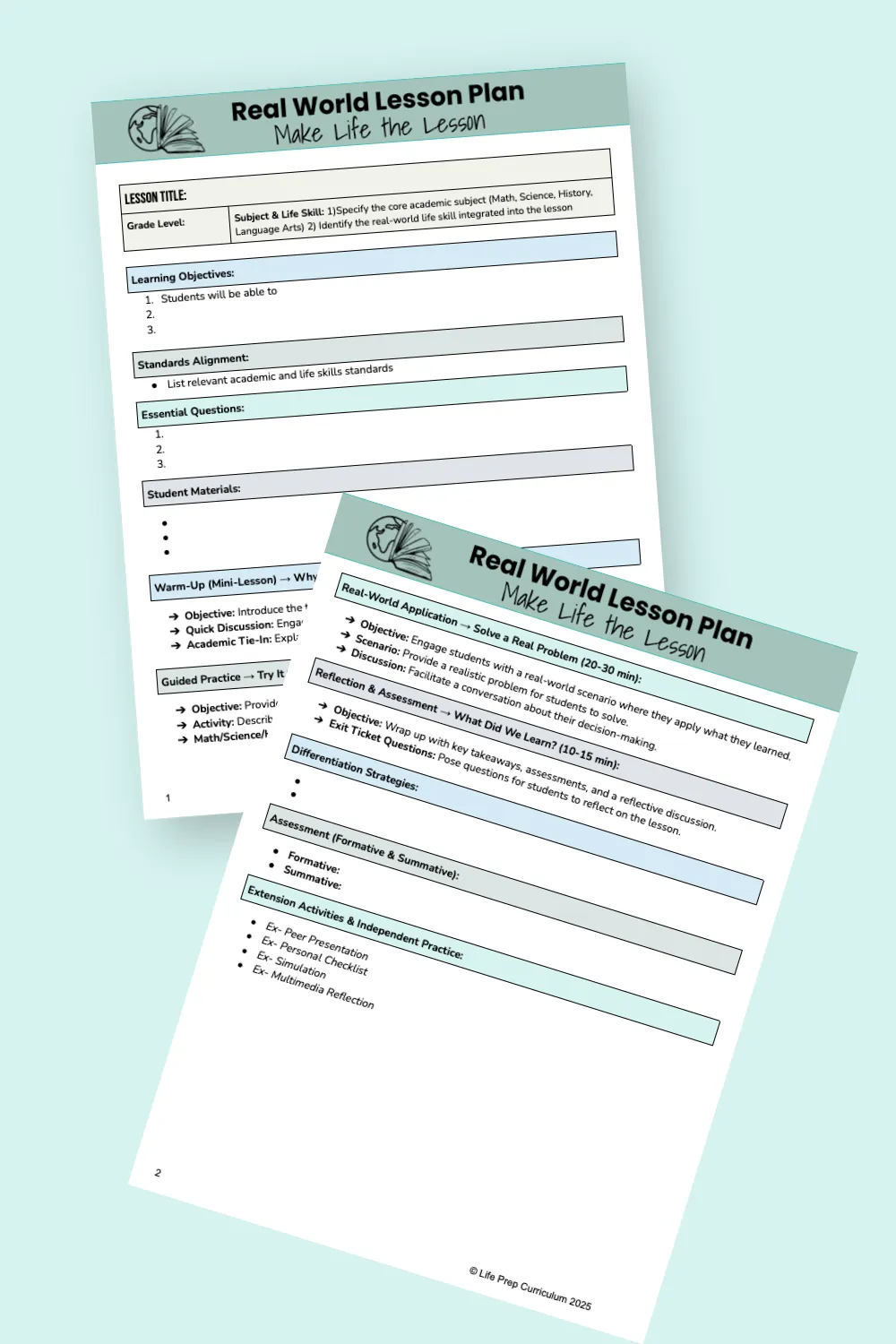
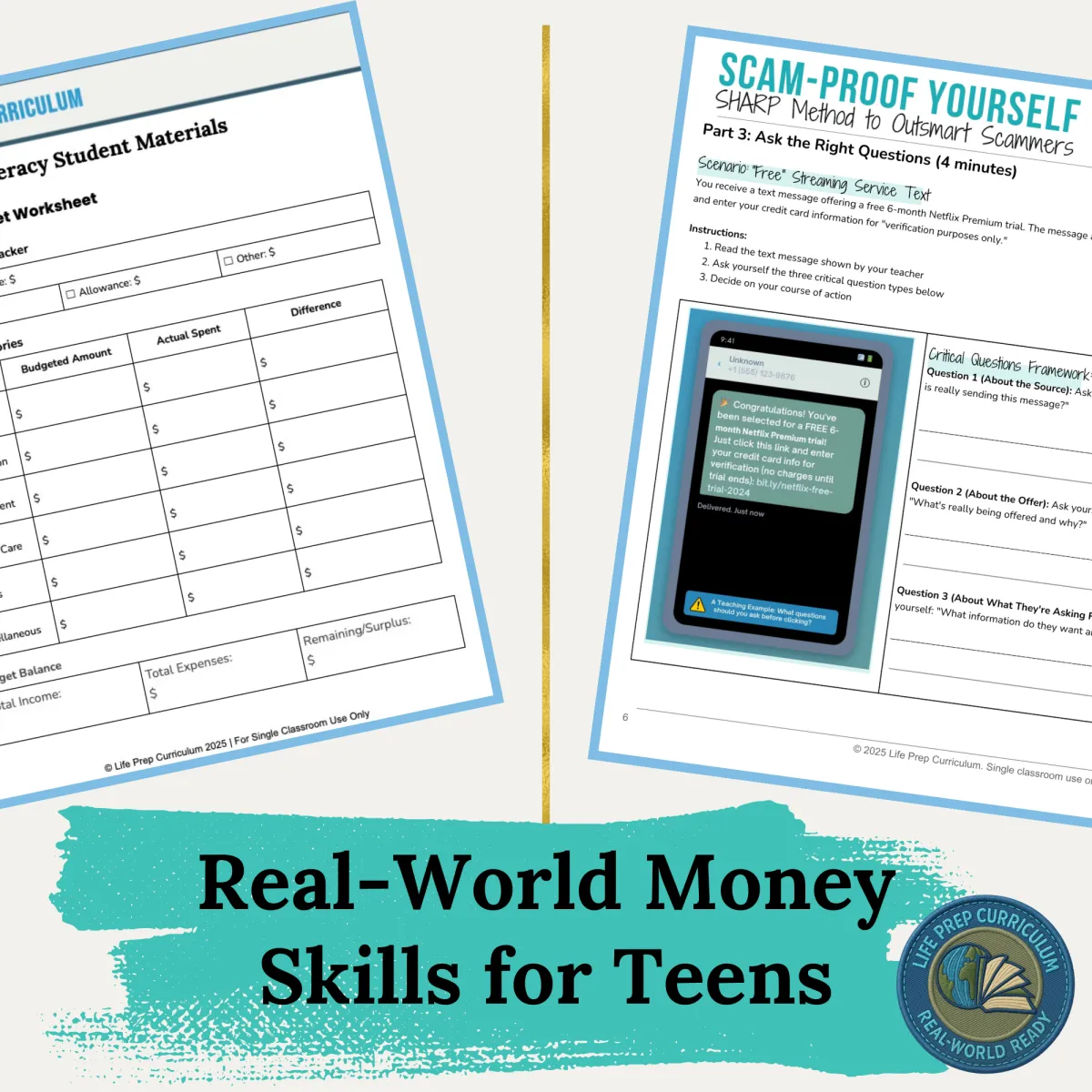
That's why I created Life Prep Curriculum—to bridge the gap between what school teaches and what life demands.
Want a simple way to check what your student actually needs?
Quick, clear, and wildly useful.
Why Traditional School Isn't Cutting It
Here's the part we all know but rarely say out loud: School isn't designed to teach kids how to live.
It's designed to cover standards, hit test benchmarks, and keep moving.
Meanwhile, students struggle with the real stuff:
They don't know how to budget
They're afraid to advocate for themselves
They leave school confused, overwhelmed, and underprepared
This isn't about blame—it's about reality.
As an educator, I felt this gap every day in the classroom.
And now? I'm here to help you close it.
The 12 Essential Life Skills They Should Teach in School (But Don't)
Our Standards to Life™ Framework systematically connects academic standards to real-world competencies. Here are the 12 skill domains every teen needs—and how to teach them without overhauling your life.
Financial Literacy & Consumer Rights
Emergency funds, debt management, investment basics, risk management, and legal literacy—everything teens need to know about money and their rights.
→Complete Financial Literacy Curriculum
Health & Wellness Literacy
Navigating preventive care, nutrition, sleep hygiene, mental health awareness, and stress management—because health literacy is survival literacy.
→ Health Literacy Resources
Independent Living & Tech Skills
Home management, digital literacy, transportation navigation, time management, and consumer decision-making—the daily competencies for self-sufficiency.
→ Independent Living Curriculum
Communication & Relationship Skills
Emotional intelligence, communication strategies, relationship maintenance, social skills, and conflict resolution—how to navigate the human side of life.
→ Communication Curriculum
Career Readiness & Professional Skills
Career self-development, critical thinking, teamwork, leadership, ethics, and adaptability—the competencies employers actually want.
→ Career Development Resources
Executive Function & Self-Management
Self-awareness, emotion regulation, decision-making frameworks, resilience building, and personal organization—the skills that make everything else possible.
→ Executive Function Toolkit
Environmental Awareness & Sustainability
Environmental awareness, resource conservation, home/property management, transportation choices, and consumer responsibility—living responsibly on the planet.
→ Environmental Literacy Resources
Creative Expression & Personal Growth
Creative engagement, personal meaning, leisure management, cultural participation, and self-actualization—because life is about more than just surviving.
→ Personal Growth Resources
Digital Citizenship & Online Safety
Digital literacy, information security, digital communication, information evaluation, and digital wellness—navigating life in a connected world safely and effectively.
→ Digital Citizenship Toolkit
Information Literacy & Critical Thinking
Information literacy, continuous learning, problem-solving, cultural competence, and innovation thinking—how to learn anything, anytime.
→ Learning & Growth Resources
Civic Engagement & Social Responsibility
Democratic participation, community involvement, global citizenship, ethical decision-making, and social justice awareness—how to be an active, responsible citizen.
→ Civic Responsibility Curriculum
Emergency Preparedness & Safety
Risk assessment, emergency planning, crisis response, recovery planning, and community coordination—the skills nobody hopes to use but everyone needs.
→ Emergency Prep Resources
Life Prep for Homeschooled Teenagers (And Everyone Else)
What teens need from parents isn't perfection—it's practice.
No, you don't need a Pinterest-perfect system.
You don't even need a detailed lesson plan.
Start where you are:
Ask your student to plan a meal
Reflect together on a decision they made
Give them control of part of the weekly schedule
Talk through why a mistake happened—and what to do next
These are lessons. They just don't come in a workbook.
Whether you're homeschooling, teaching in a classroom, or parenting a teen in traditional school—these skills can be taught anywhere, anytime, without completely overhauling your routine.
Need a little structure?
The Student Skills Assessment Toolkit is a $7 plug-and-play resource with checklists, skill snapshots, and low-prep activities to help you start where your student actually is.
Not Sure What Skills to Focus On First?
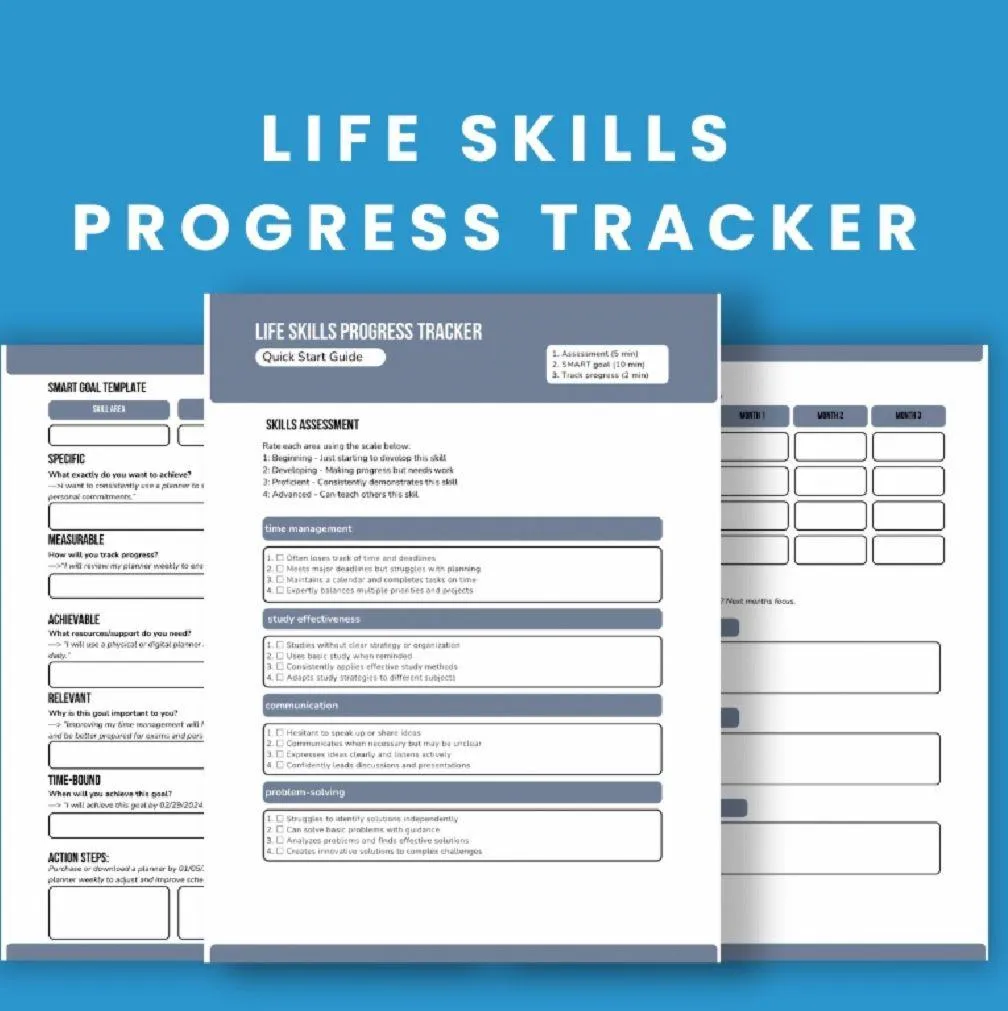
Start with the Tracker.
Always the Tracker.
The Life Skills Tracker is a free, practical assessment to help you see where your student's thriving—and where they're struggling.
You'll walk away with a clear sense of what life prep actually looks like (and where to go next).
Quick, honest assessment
Clear next steps
Wildly useful
Common Questions About Teaching Life Skills
Question 1: What are the 12 basic life skills?
The 12 essential life skills every teen needs include: financial literacy (budgeting, banking, credit), time management, self-advocacy and communication, independent living skills (cooking, cleaning, household management), decision-making and problem-solving, health and wellness literacy, career readiness, digital literacy and safety, consumer awareness, environmental awareness, creativity, and goal-setting with executive function.
Question 2: What should we have learned in school but never did?
Most students wish they'd learned practical skills like managing money, filing taxes, understanding credit, navigating healthcare and insurance, conflict resolution, job searching and interviewing, basic home maintenance, meal planning and cooking, and how to advocate for themselves in professional settings.
Question 3: What teens need to succeed in the real world?
Teens need more than academic knowledge—they need practical competence in daily living, financial literacy, strong communication skills, the ability to self-advocate, problem-solving capabilities, basic health and wellness understanding, career preparedness, and the executive function skills to manage their time and responsibilities effectively.
Question 4: What to include in a beginner's life prep starter kit?
A life prep starter kit should include: a budget template and financial tracking tools, a life skills assessment checklist, goal-setting worksheets, time management planners, decision-making frameworks, self-advocacy scripts, independent living checklists (cooking, cleaning, laundry), and career readiness resources like resume templates and interview guides.
More Real-World Learning You Can Start Today
Here's where to go next based on your student's needs (or your own sanity):
First Steps in Making Academic Learning Practical and Fun
Simple strategies to connect classroom learning to real life
Practical Chores for Life Lessons
Turn daily routines into skill-building opportunities
Life Prep Curriculum: Blending Academics with Real-Life Skills
How to integrate both without losing academic rigor
TL;DR?
Life prep doesn't require perfection. It just requires intention.
And I've got tools, structure, and support to help you do this without burning out.
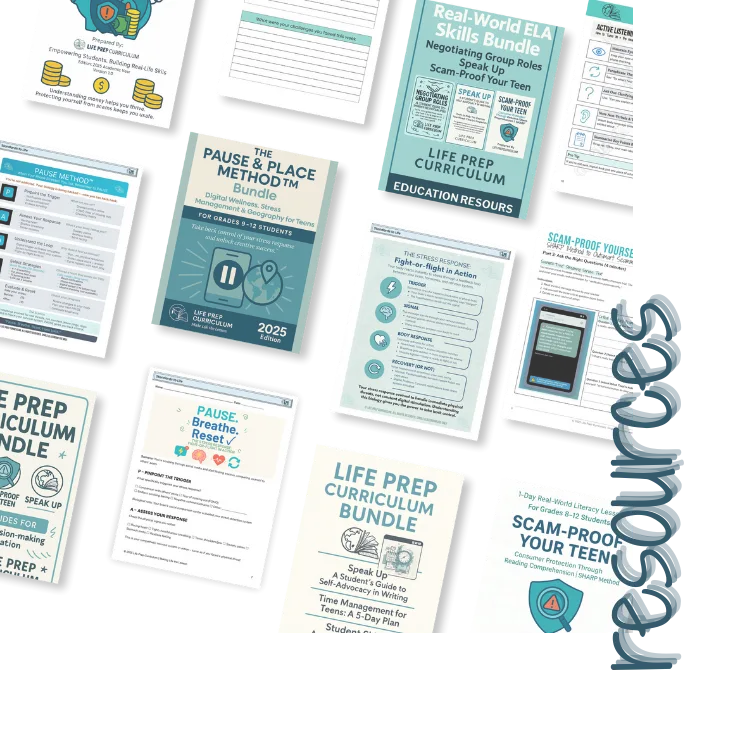
A growing curriculum library filled with standards-aligned, ready-to-use resources for teaching real-world skills that actually count toward academic credit.


Stay in the Loop
Standards-aligned resources and teaching tips—straight to your inbox