Spring Break Is a Life Skills Final Exam Your Teen Doesn't Know About
The alarm doesn't go off. Nobody has to be anywhere. The schedule that held everything together for the past seven months just... evaporates.
And within 48 hours, you'll know exactly where your teen stands on independence.
Not because you tested them. Not because you set up a challenge or assigned a project. Because spring break is the test — and it's already graded by the time you realize it's happening.
Can they feed themselves something that isn't cereal at 2 PM? Can they manage their time when nobody is managing it for them? Can they make a plan with friends that doesn't require you to coordinate every detail? Can they exist in your house for a week without the structure of school holding the day together?
These aren't trick questions. They're the exact skills that determine whether your teen is ready for what comes after graduation — the dorm room, the apartment, the first job where nobody tells you when to eat lunch.
Spring break just makes them visible.
The Invisible Curriculum of an Unstructured Week
Here's what most people miss about spring break: it's not a vacation from learning. It's a transfer of context.
Every skill your teen uses during the school day — time management, task initiation, decision-making, self-regulation — was being scaffolded by the school environment. The bell tells them when to move. The schedule tells them what comes next. The teacher tells them what to prioritize. The cafeteria tells them when to eat.
Remove the scaffold, and you see what's internalized versus what was borrowed.
This isn't a failure. It's data.
If your teen sleeps until noon, eats sporadically, can't figure out what to do with themselves, and ends the week having accomplished nothing they intended — that's not laziness. That's a skills gap made visible. The structure was doing the heavy lifting, and now you know.
And knowing is genuinely useful, because you can't build skills you don't know are missing.
The academic parallel is right there. In any classroom, formative assessment tells you what students actually understand versus what they can perform with support. Spring break is the formative assessment for life skills. It's low-stakes, real-world, and it tells you more than any checklist ever could.
What Spring Break Actually Tests
Let's get specific. Here's what an unstructured week quietly evaluates — and what each gap actually means.
Time management without external structure.
During school, time is managed for your teen. Periods, passing times, due dates, practice schedules — the architecture of the day is handed to them. Spring break removes that architecture entirely.
What you might see: sleeping until noon, staying up until 3 AM, "wasting the whole day" on screens, or making plans they never follow through on.
What it means: they haven't yet internalized time awareness — the ability to feel time passing and plan accordingly. This is an executive function skill, and for neurodivergent teens, it's often one of the last to develop. It doesn't mean they don't care about time. It means the internal clock that neurotypical brains develop intuitively hasn't fully come online yet.
The school standard this connects to: CCSS.MATH.CONTENT.6.RP — ratios and proportional reasoning. The same mathematical thinking that helps students understand "if this takes X minutes, and I have Y hours" is the thinking behind time management. They're already learning the academic version. The life version just hasn't been explicitly taught.
Feeding themselves.
Not cooking a five-course meal. Can they identify that they're hungry, figure out what's available, and make something happen — without someone prompting them?
What you might see: skipping meals entirely, eating only snacks, waiting for someone else to announce dinner, or the classic 3 PM first-meal-of-the-day that is somehow both breakfast and lunch and neither.
What it means: meal planning — even at the most basic level — requires sequencing, initiative, and a kind of self-awareness that says "my body needs fuel and that's my responsibility to handle." For teens who've always had meals appear at set times, this is genuinely new territory.
Managing money without supervision.
If your teen has spring break spending money — birthday cash, a part-time job paycheck, leftover holiday money — the week reveals their financial decision-making in real time.
What you might see: spending everything in the first two days, impulse purchases that feel urgent in the moment, or the opposite — anxiety about spending anything at all.
What it means: budgeting over time (not just per-transaction) is a skill that requires delayed gratification and future-self thinking. The 50/30/20 framework we've talked about on this blog? Spring break is when it gets a field test.
Social planning and communication.
Can your teen make plans with friends independently? Not "can they text back and forth" — can they propose an activity, coordinate timing, handle changes, navigate the moment when two friends want to do different things?
What you might see: waiting for someone else to make plans, agreeing to everything (even things they don't want to do), or defaulting to screens because coordinating people is too many moving parts.
What it means: social planning is project management. It's the same skill set — communication, compromise, logistics, flexibility — that employers will expect in every collaborative work environment. And it connects directly to the self-advocacy and conflict resolution skills your teen is building (or not yet building).
Being alone with themselves.
This one surprises parents. But spring break often surfaces your teen's ability — or inability — to tolerate unstructured time without external stimulation.
What you might see: constant need for someone to do something with, immediate reach for a screen at any hint of boredom, restlessness that looks like agitation.
What it means: the ability to be alone with your own thoughts, to self-direct, to tolerate the discomfort of not being entertained — that's self-regulation. And it's foundational to every form of independence that comes next.
This Is Data, Not a Report Card
I want to be careful here, because the temptation — especially mid-break, when you're watching all of this happen in real time — is to turn spring break into a lecture series.
Don't.
If you use what you're observing to deliver a monologue about how they'll never survive college if they can't make a sandwich, you've turned the formative assessment into a punishment. And the data stops flowing, because your teen stops letting you see it.
Instead, notice. Take mental notes. And wait.
The conversation happens after spring break, not during it. And it sounds less like "you couldn't even manage to..." and more like "I noticed some things this week that made me think about what skills we could build together before next year."
That reframe matters. It moves from judgment to collaboration. From "you failed" to "we found the gaps."
For teens with demand avoidance or sensitivity to criticism, this timing and tone is everything. The PDA-informed approach applies here: observation without commentary during the event, collaborative reflection afterward.
The Skills That Spring Break Builds (If You Let It)
Here's the part most parents miss: spring break isn't just a diagnostic. It's a training ground — but only if you resist the urge to rescue.
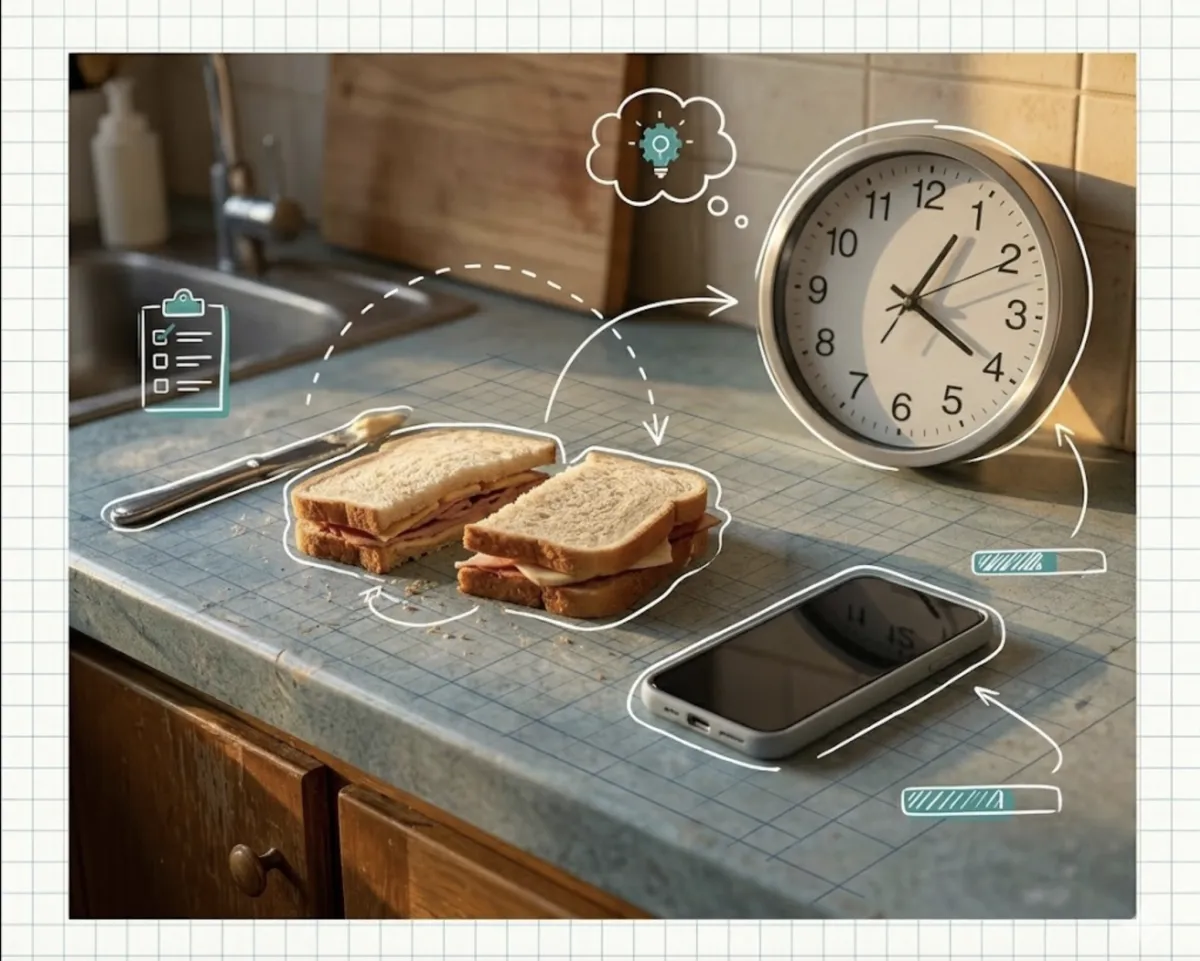
When your teen finally gets hungry enough to make a sandwich at 2 PM, they just practiced initiative.
When they text a friend and coordinate a plan without your involvement, they just practiced communication and logistics.
When they realize at 4 PM on Wednesday that they've done nothing all week and feel the discomfort of that — that is the internal signal that precedes every form of self-motivation. It's unpleasant. It's also necessary.
The goal isn't a perfect spring break. The goal is a spring break where your teen encounters the natural consequences of their current skill level — and starts developing the internal motivation to build more.
This is exactly how the Standards to Life™ Framework approaches every skill: not as a lecture, but as a lived experience connected to something they already understand academically. Time management isn't an abstract productivity concept — it's the proportional reasoning they already use in math class. Budgeting isn't a future-adult problem — it's the financial literacy they're learning about in their state-required curriculum. Self-advocacy isn't "being assertive" — it's the same structured argument framework their English teacher demands.
The academic tools already exist. Spring break just makes the life application obvious.
A Low-Key Framework for Break Week
You don't need a formal plan. You need three questions you ask yourself (not your teen) each day:
What did I see today? Not what did they do wrong — what did you observe? Meal patterns, time use, social engagement, screen behavior, emotional regulation. Just notice.
What skill would have changed this moment? When they couldn't figure out what to do with their afternoon, was the missing skill time management? Self-direction? Distress tolerance? Naming the skill is more useful than naming the failure.
Is this a conversation for now or for later? Most of the time, it's later. The exception: safety. Everything else can wait for a calmer, more connected moment after break.
If you want to take it one step further, the Life Skills Progress Tracker gives you a framework for organizing these observations into actual skill-building priorities — not a grade sheet, but a starting point for the conversation you'll have when everyone's back in routine.
What This Week Is Really Telling You
Spring break reveals the distance between where your teen is and where they're headed. That distance isn't a crisis. Every teen has gaps. Every teen has skills that are further along than expected and skills that aren't anywhere close.
The parents who use this week well aren't the ones who fill every hour with structured activities or turn chores into character-building exercises. They're the ones who watch, notice, and use what they see to guide what comes next.
Your teen doesn't know they're taking a final exam this week. That's the point. The most honest assessment of any skill is what happens when nobody's grading it.
Watch what spring break shows you. Then help them build what's missing — not with a lecture, but with the kind of practice that looks like real life. Because that's what's coming.
Related Posts:
Your Teen Isn't Lazy, Broken, or Defiant: A Parent's Guide to What's Actually Going On
When Motivation Disappears: Mid-Year Executive Function Reset
The Real Reason Life Skills Don't Stick (And What to Do Instead)
STANDARDS ALIGNMENT
CCSS Math: 6.RP (ratios and proportional reasoning — time management), 7.RP.3 (percentages — budgeting)
CCSS ELA: SL.9-10.1 (collaborative discussion — social planning), W.9-10.1 (argument writing — self-advocacy connection)
CASEL: Self-awareness, self-management, responsible decision-making
ASCA Mindsets & Behaviors: M 4 (understanding that postsecondary education and lifelong learning are necessary), B-LS 7 (identify long- and short-term academic, career, and social/emotional goals), B-SMS 1 (responsibility for self)
NHES: Standard 5 (decision-making skills), Standard 7 (practicing health-enhancing behaviors)
NGSS (implicit): HS-LS1 (biological needs — nutrition, sleep cycles as scientific concepts)
Life Prep Curriculum | Standards to Life™ Framework
